How a Junta Turns a Coup Into a Presidency
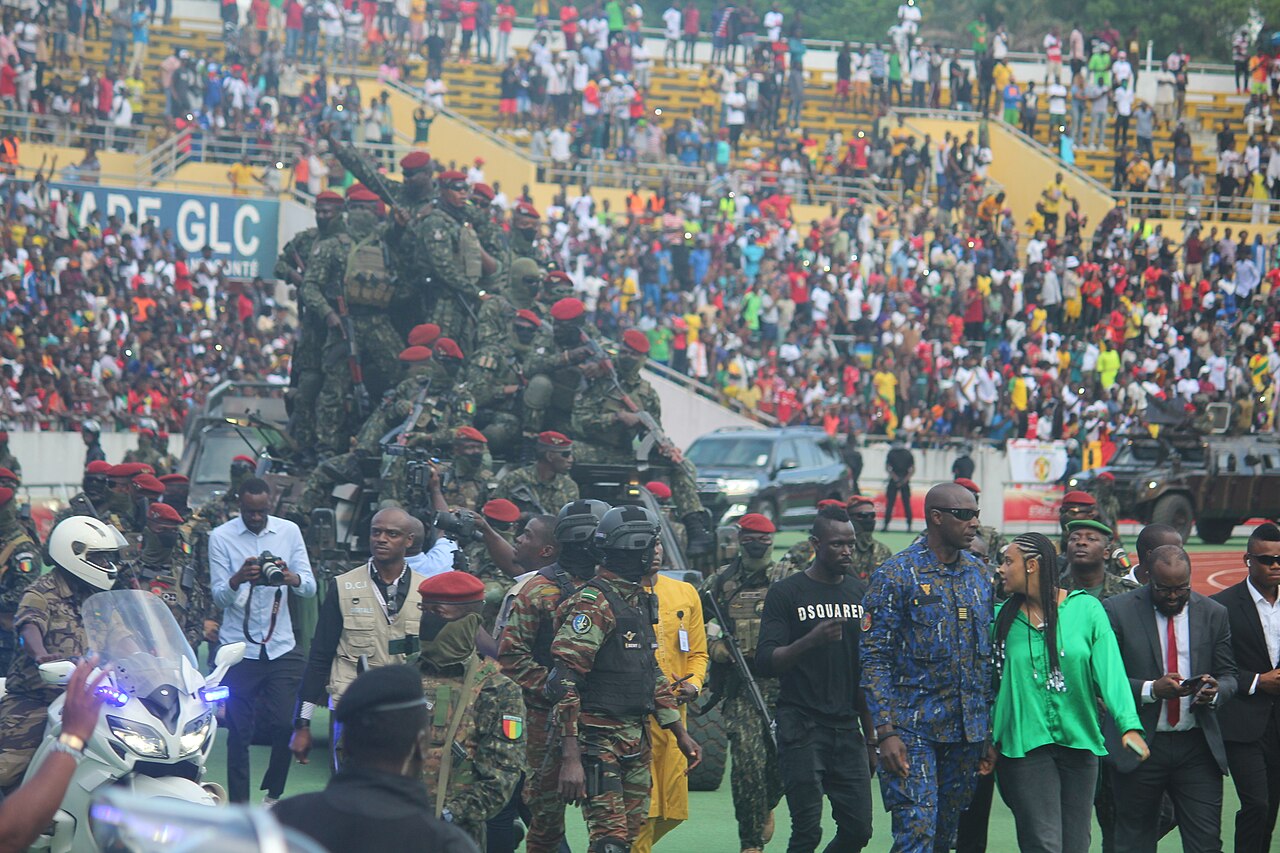
A coup does not always end with a military leader handing power back to the people. Sometimes it ends with the same leader taking off his uniform, putting on a suit, and asking the world to recognize him as president.
The soldiers arrive promising to save the country. They remove the government, suspend the old rules, and announce a transition. The public is told that this is temporary, necessary, and different from the abuses that came before it.
Then the transition becomes an opportunity to decide who writes the next constitution, who oversees the next election, and who is allowed to run.
By the time voters receive their ballots, the leader who captured the state may already have helped design the system that is supposed to decide whether he keeps it.
Guinea and Gabon offer two recent examples. Their circumstances are different, but both raise the same question: has power returned to the public, or has military power acquired an elected title?
Guinea: the promise changed before the title did
Mamadi Doumbouya seized power in Guinea on September 5, 2021, overthrowing President Alpha Condé. The country was already confronting a constitutional crisis: Condé had secured a controversial third term after changing the constitution. Human Rights Watch documented the repression and political instability surrounding that process.
That history matters. People were not necessarily defending a healthy democracy when they welcomed the removal of an incumbent who had bent the rules to remain in office. But removing one leader who manipulated a constitution does not give his replacement permission to manipulate the next one.
Doumbouya initially promised not to run for president. A new constitution later removed the restriction on military leaders becoming candidates and extended presidential terms from five years to seven. He won the December 2025 election and was sworn in on January 17, 2026.
The man who was supposed to supervise the transition became its principal beneficiary.
Nor was the contest simply a neutral opportunity for every political force to make its case. Reporting on the election and its aftermath described the exclusion of major opposition leaders from the presidential race.
In March 2026, the government dissolved 40 political parties, including the main opposition groups. Authorities cited failures to meet their obligations. The decree stripped the parties of legal standing and prohibited political activity under their names and symbols.
An election had happened. The space for challenging its winner was still being narrowed.
That is why the transition cannot be judged solely by whether someone eventually cast a ballot. It must also be judged by what citizens were allowed to choose, and whether they can organize to choose differently next time.
Gabon: control the transition, then enter the race
Brice Oligui Nguema led the military takeover that removed Ali Bongo in August 2023. The coup ended more than half a century of rule by the Bongo family. For people exhausted by that dynasty, the removal could look like a new beginning.
The question was who would control that beginning.
Before the April 2025 presidential election, Oligui Nguema had appointed members of the transitional legislature and all nine Constitutional Court members. The Africa Center for Strategic Studies examined how the new constitution and electoral rules opened a path for his candidacy while concentrating executive authority.
The changes included a seven-year presidential term and the removal of the prime minister's office. Election administration moved to the Interior Ministry, while eligibility requirements restricted who could contest the presidency.
Oligui Nguema then won the April 12, 2025 election. Gabon's Constitutional Court proclaimed a final result of 94.85 percent. His inauguration in May formally ended the military transition, with the leader of the takeover remaining president.
Public support was part of the story. International IDEA reported that he entered the election with the endorsement of all major political parties. We should not pretend that every person supporting a former military leader has been tricked, or that popular frustration with the previous government was imaginary.
But popularity and accountability are not interchangeable. A leader can have genuine supporters and still benefit from a political system he helped construct while his opponents were trying to compete within it.
The election begins before election day
These cases show why the most consequential decisions may come long before the polls open.
A transitional government can decide the timetable. It can appoint officials to the institutions overseeing the process. It can introduce a constitution that changes term lengths, eligibility, and the powers of the eventual president.
Each decision can be presented separately as an administrative reform. Together, those decisions can determine how difficult it will be to challenge the person already controlling the government.
That is the advantage of capturing the state first and seeking electoral approval afterward. Other candidates must win power under the rules. The transitional leader has already held power while those rules were being made.
A ballot count cannot answer every question about that advantage. Even an accurately counted vote does not erase restrictions that shaped who could campaign, who could appear on the ballot, or who could criticize the government without fear.
The useful test is not whether the leader looks presidential. It is whether the institutions can act independently of him, and whether the public has a realistic way to replace him.
Recognition can close the circle
Outside recognition is another part of the transformation.
The African Union suspended both countries after their coups. It later lifted Gabon's suspension on April 30, 2025, following the presidential election. On January 22, 2026, it lifted Guinea's suspension, congratulating Doumbouya and welcoming the electoral process.
The AU's own democracy framework sets a demanding standard. Article 25(4) of the African Charter on Democracy, Elections and Governance bars perpetrators of unconstitutional changes of government from elections intended to restore democratic order in states bound by the charter.
The contrast between that principle and the acceptance of transitions led by coup makers deserves scrutiny. Formal readmission can restore a government's diplomatic standing without answering every concern about how its leader secured the presidency.
There are reasons to maintain diplomatic contact with a government, including protecting civilians and avoiding further instability. But engagement does not require pretending that an election automatically resolves the concentration of power that preceded it.
Otherwise, the message to the next group of officers becomes dangerously convenient: seize power, supervise the transition, win the election held under the new rules, and wait for the invitations to return.
The real test is whether the leader can lose
The people deserve more than a choice between an old government that failed them and a new government that asks them to stop questioning it.
A meaningful transition should protect opposition organizing, independent journalism, impartial election administration, credible challenges to results, and civilian authority over the military. Those protections matter even when the leader is popular. They matter most when he is not.
A government cannot claim to have restored the people's power while treating their ability to organize against it as a threat to the country.
For Coup Atlas, the original seizure of power remains part of the record. A later election is a new event to examine, not an eraser for the coup that placed the winner in control of the state.
We should examine who made the rules, who was excluded, which institutions can say no to the president, and what happens when the public wants someone else.
Because a transition has not fulfilled its democratic promise simply because the same man is now called an elected president.
The real test is whether the people can make him a former one.